 |
Key Points
- Practicing and knowing your content is essential to demonstrating clearly and confidently.
- Understand how to use the interface/tools correctly and confidently
- Use what are these? Remember the audience's point of view and pay attention to pace, audiences existing knowledge and what is on your screen.
- Be organised with logins and programs.
|
What is a demonstration?
Demonstration is an assessment in which a student shows that they have learned a skill or set of skills required for the subject. It is a type of oral presentation and can be delivered live or recorded. The student usually shares a tool or software program, for example Microsoft Project to show how an end result or output is produced. Being able to demonstrate confidently is an essential skill to show that the student has understood the process of completing the task.
What makes a good demonstration?
- A clear and logical use of tool or an interface to create an output. This requires good understanding about how to use the interface or the tool.
- Prior planning and rehearsing so that the illustration is easy for the audience to understand.
- Effective audio and visual aids, e.g. pictures, graphs, images, video clips. These aids support and enhance the spoken message and its impacts on the audience.
- Good delivery techniques, which include:
- clear, enthusiastic, not too fast or soft voice,
- eye contact with the audience,
- natural, relaxed stance,
- not reading word-for-word from your notes or report, and
- interaction and engagement with the audience.
How do I plan it?
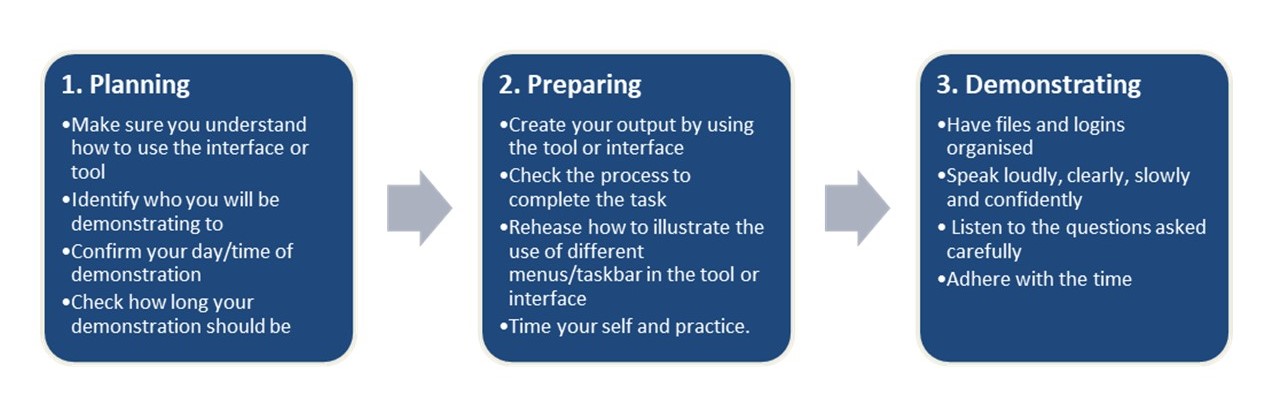
Checklist for demonstration
|
Before the demonstration:
- Understand what skill or knowledge you need to show.
- Know what task or activity you will be doing.
- Review the assessment criteria or rubric.
- Practice the task or similar activities.
- Ensure that you have all the materials or tools you need.
- Know how much time you will have and where it will take place.
- Ask questions if anything is unclear.
|
|
During the demonstration:
- Stay focused and calm.
- Follow the steps or process you practiced.
- Show your skills clearly and confidently.
- Try to solve problems or adapt if something does not go as planned.
- Use any tools or materials safely and correctly.
- Communicate clearly, slowly and confidently (if speaking or presenting is part of the task)
|
|
After the demonstration:
- Listen to the feedback from your teacher or assessor.
- Reflect on what went well and what you could improve.
- Ask questions if you didn't understand the feedback.
- Record or remember the next steps for improvement
|

